Table Of Content

Thus every image we've ever seen of Him is based solely on artists' imaginations. How does Jesus’ hair feature in various Christian denominations? While there is no single answer to this question, it is clear that Jesus’ hair plays an important role in Christian theology. For some, it is a symbol of holiness and purity, while for others it is a sign of his connection to God. For many, it serves as a reminder of Jesus’ humanity and his divine nature.
Did the Historical Jesus Have Long Hair?
Archaeologists Discover an Ancient Portrait of Young Jesus in an Abandoned Israeli Church - artnet News
Archaeologists Discover an Ancient Portrait of Young Jesus in an Abandoned Israeli Church.
Posted: Thu, 15 Nov 2018 08:00:00 GMT [source]
Some philosophers, like St. Augustine, appreciated the diverse ways of portraying the incarnate Jesus. Historically, artists have depicted Jesus with both long-flowing hair and short, neatly trimmed hair. However, neither of these images match God's commands regarding hairstyles. The Jesus we’ve inherited from centuries of Christian art is not accurate, but it is a powerful brand.
The Old Testament
Jesus wore clothes that made him look 'rough and scruffy' - Daily Mail
Jesus wore clothes that made him look 'rough and scruffy'.
Posted: Fri, 09 Feb 2018 08:00:00 GMT [source]
We can draw circumstantial shreds of evidence by carefully reading the four gospels. When Jesus was physically alive, the people around Him have short hair (this can easily be proven by reading historical findings of how people looked like during the antiquities). During the first century AD, Jewish men typically had short hair, while women wore their hair longer.
Bible Verses about Hair Length

In contemporary times, some individuals believe that it’s not important to focus on the physical appearance of Jesus at all. Instead, they argue that his teachings and the message of Christianity are what truly matter. Regardless of whether or not Jesus had long hair, he remains an important figure in religious history and cultural traditions. As a result, artists who wanted to convey a sense of divinity turned to the biblical narratives and gospel accounts to create traditional depictions of Jesus with long hair. They took inspiration from other biblical characters, such as Samson and Absalom, who were also described as having long hair, and incorporated that into their artistic interpretations.
The Long Hair Debate: Historical and Cultural Context
Biblical figures had specific cultural standards and traditional portrayals, and many believe that Jesus would not have resembled the long-haired iconography of Jesus that is now traditionally depicted in religious art. However, many artists have taken poetic license to create different artistic interpretations of Jesus, in reflection of their own cultural practices and traditions of Christianity. Over the centuries, Jesus has been depicted in many different ways, both in art and literature. In some Eastern Orthodox icons, Jesus is shown with long, curly hair, often down to his shoulders. Other artistic representations, such as those from the Renaissance period, show Jesus with short hair.
Unveiling the Miraculous Secrets Behind God’s Right Hand – You Won’t Believe Number 5

The length of Jesus’ hair in these images is often symbolic and may represent his holiness or divinity. Some of the earliest known artistic representations of Jesus date to the mid-third century A.D., more than two centuries after his death. These are the paintings in the ancient catacombs of St. Domitilla in Rome, first discovered some 400 years ago. Reflecting one of the most common images of Jesus at the time, the paintings depict Jesus as the Good Shepherd, a young, short-haired, beardless man with a lamb around his shoulders. Despite these historical and cultural arguments, there is still no definitive answer to the question of whether or not Jesus had long hair. Many contemporary interpretations of Jesus’s appearance acknowledge that physical descriptions of him are not provided in the Bible.
What Did Early Christians Think Jesus Looked Like?
It certainly does not mean that the hair is on top of the head. The Bible clearly teaches in this passage that long hair is a covering and short hair is not. This covering is a sign of submission and is seemly on a woman. In fact, short hair that no longer acts as a covering is shameful on a woman.
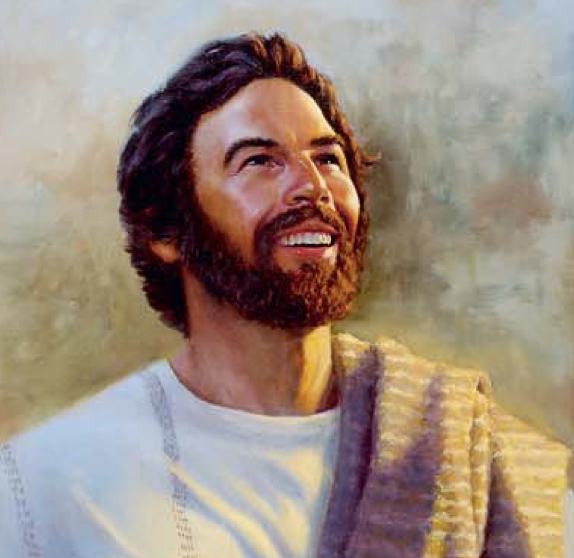
Latter-Day Saint depictions
Answer that question HONESTLY and I hope you know the right answer. These are the three pieces of evidence that clearly tell us the appearance of our Lord and Savior Yahshua or Jesus Christ. If Christ had long hair, he would look like a tender, effeminate man. If we would be honest, the popular paintings of Christ make Him like a weakling. In the time of Jesus’ life, the Jews regard a man with long hair as someone who is deviant and never regarded the custom of the land.
While it is true that Jesus is always depicted as someone with a semi-feminine face, long hair, and smooth facial skin, this is VERY FAR from the Jesus of your Bible. Perhaps the most telling is that when Judas betrayed Jesus, he had to identify Jesus by a kiss. That was the prearranged signal Judas had given so that the guards could identify Jesus. Because Jesus looked just like any average man of His day, and they wouldn't have been able to identify Him if Judas hadn't betrayed Him with a kiss. The discussion of this passage is not mainly about the length of hair for men. However, this verse makes a distinction between the length of hair for men and for women.
From the Old Testament it may be gathered that it was customary for the men to have their hair cut from time to time. The Nazarites allowed theirs to grow uncut for religious reasons. Absalom, proud of his thick head of hair, had it cut once a year only. It was never shaved save on special occasions; the high priests and the priests in general were expressly forbidden to have theirs shaved. They were neither to shave their hair according to heathen custom, nor to allow it to grow uncut like that of the Nazarites (comp. Ezek. xliv. 20). There is no other information in the Bible concerning the care of the hair.
At the time, it was fashionable for men to have longer hair, and thus it was not "a disgrace". The historian Josephus describes the Zealots (a Jewish group who wanted to push the Romans out of Judaea) as a bunch of murderous transvestites who donned "dyed mantles" - chlanidia - indicating that they were women's wear. This suggests that real men, unless they were of the highest status, should wear undyed clothing. Overall a man in Jesus's world would wear a knee-length tunic, a chiton, and a woman an ankle-length one, and if you swapped these around it was a statement.
You would probably make a picture that looked similar to the people around you. However, studying pictures of people who lived at the same time as George Washington could help you come up with a close approximation of men's hairstyles during that time. Jesus wasn't the tender, effeminate man with a somewhat angelic appearance as commonly depicted in paintings. He was a carpenter, a builder, a man who knew the construction trade. He knew how to cut down trees and make wooden beams, to haul rocks to build walls, to construct buildings from stone and timber. "In fact this familiar image of Jesus actually comes from the Byzantine era, from the 4th Century onwards, and Byzantine representations of Jesus were symbolic - they were all about meaning, not historical accuracy.
We know from ancient sculptures and paintings that many people during Jesus’ time had short hair, but this does not necessarily mean that Jesus did as well. Similarly, portraits of Jesus from the Middle Ages often depict him with long hair, but this does not necessarily mean that this is how he looked in real life. Despite these debates, the symbolism of long hair remains a powerful element in Christian iconography and religious art. Whether Jesus had long hair or not, he has been consistently portrayed with flowing locks for almost 2000 years, and this visual representation has come to symbolize his connection to the divine and his spiritual power. Today, debates about the historical appearance of Jesus continue to rage. Some scholars argue that his hair would have been short and neatly trimmed, in keeping with standard Jewish cultural practices of the time.
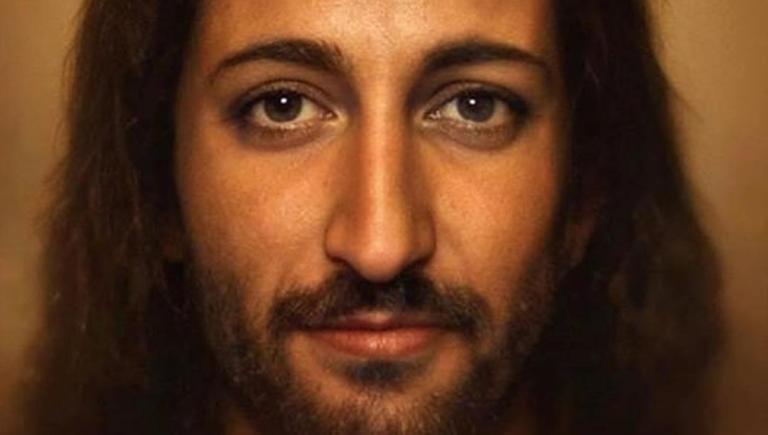
Much has been made of a digital reconstruction of a Judaean man created for a BBC documentary, Son of God, in 2001. This was based on an ancient skull and, using the latest technology (as it was), shows the head of a stocky fellow with a somewhat worried expression. Since males have short hair, Jesus can easily be spotted and easily stand out from the crowd IF He had long hair. The paintings to which you allude tend to be those painted by the European masters in the 16th & 17th Centuries.