Table Of Content
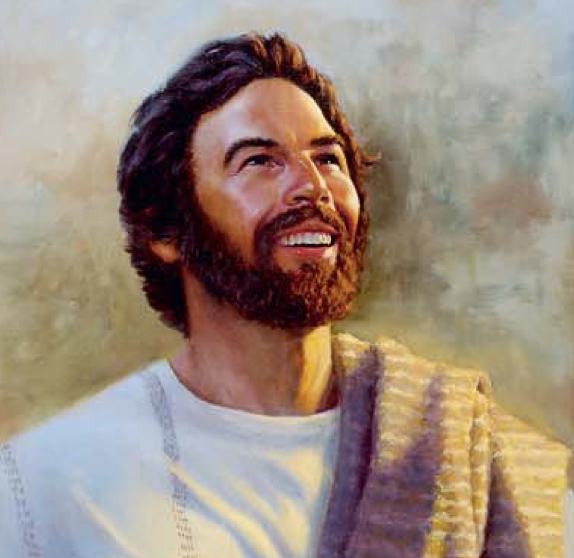
It is also a symbol of his role as the messiah and the chosen one. In the New Testament, the appearance of Jesus Christ was not described in detail; however, sometimes, artistic interpretations present him with long hair. It is believed that his long hair represented his holiness and divinity. It is generally accepted that the portrayal of Jesus with long hair began around the 4th century, when Christian art had become more popular.
Early Church to the Middle Ages
Traditionally, depictions of Jesus in religious art portray him with long hair, which provides an important iconography of Jesus. The long hair was a sign of his divinity and set him apart from other biblical characters. Artists have used this representation of Jesus as a means of reinforcing his holiness and his message to the followers.
Most people assume that Jesus had long hair. But is that accurate?
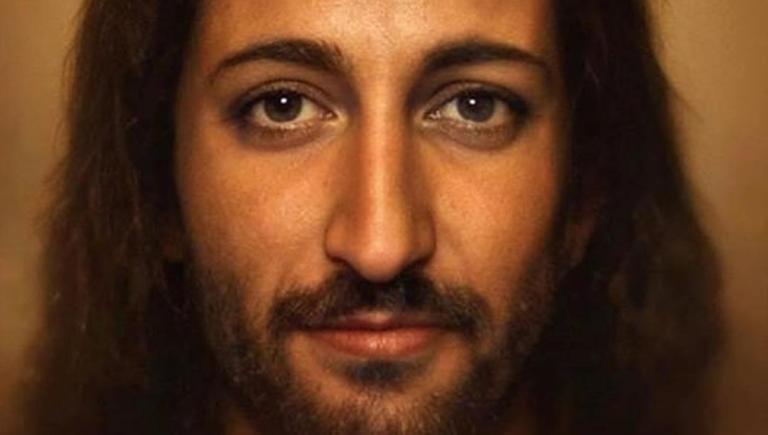
In 2018 historian Joan Taylor published What Did Jesus Look Like? Which traced portrayals of Jesus back through time from the European Jesus of western art to Jesus himself. As for the honey/olive description, Taylor writes that his skin was "a darker hue consistent with the skin tone of people of the Middle East" (p. 163). Taylor thinks the BBC's reconstruction is "quite speculative" because reconstruction of cartilage (noses, etc.) is guesswork. When trying to answer the question of whether Jesus had long hair, it is important to consider both archaeological and textual evidence. Unfortunately, there is very little archaeological evidence that can shed light on this issue.
Unveiling the Miraculous Secrets Behind God’s Right Hand – You Won’t Believe Number 5
Is This What Jesus Looked Like? AI Generates Depiction of Christ Using Mysterious Shroud of Turin - CBN.com - The Christian Broadcasting Network
Is This What Jesus Looked Like? AI Generates Depiction of Christ Using Mysterious Shroud of Turin.
Posted: Wed, 27 Sep 2023 07:00:00 GMT [source]
As Christianity spread throughout the world, so did the image of Jesus. Different cultures have developed their own interpretations of Jesus’ physical appearance, including his hair length. For example, in some African countries, Jesus is often depicted with dreadlocks, which is a sign of spiritual power. Similarly, in some Latin American countries, Jesus is often depicted with long, flowing hair.
Did Jesus Have Long Hair? Exploring the Evidence and Significance
There are, however, some images which have been claimed to realistically show how Jesus looked. One early tradition, recorded by Eusebius of Caesarea, says that Jesus once washed his face with water and then dried it with a cloth, leaving an image of his face imprinted on the cloth. This was sent by him to King Abgarus of Edessa, who had sent a messenger asking Jesus to come and heal him of his disease. This image, called the Mandylion or Image of Edessa, appears in history in around 525. Numerous replicas of this "image not made by human hands" remain in circulation. There are also icon compositions of Jesus and Mary that are traditionally believed by many Orthodox to have originated in paintings by Luke the Evangelist.
Unveiling the Divine: How God’s Dreams and Visions Shaped the Bible and Are Still Transforming Lives Today
But Jesus did not keep a Nazirite vow, because he is often found drinking wine - his critics accuse him of drinking far, far too much of it (Matthew chapter 11, verse 19). If he had had long hair, and looked like a Nazirite, we would expect some comment on the discrepancy between how he appeared and what he was doing - the problem would be that he was drinking wine at all. In fact this familiar image of Jesus actually comes from the Byzantine era, from the 4th Century onwards, and Byzantine representations of Jesus were symbolic - they were all about meaning, not historical accuracy. He is the most painted figure in all of Western art, recognised everywhere as having long hair and a beard, a long robe with long sleeves (often white) and a mantle (often blue).
This is particularly true in religious art, where depictions of biblical figures often link physical appearance to spiritual qualities. And perhaps no figure in religious history has been more closely tied to the symbolism of hair than Jesus Christ. In traditional depictions of Jesus, he is often shown with long, flowing hair.
There may have also been other factures involved as to why we only see Christ having long hair in Christian iconography. Among these are the Shroud of Turin, the Veil of Veronica, the Manoppello Image and so on, all of which are seen with Jesus as having long hair. The conventional image of a fully bearded Jesus with long hair emerged around AD 300, but did not become established until the 6th century in Eastern Christianity, and much later in the West.
The Significance of Jesus’ Hair in Christian Theology
Thus every image we've ever seen of Him is based solely on artists' imaginations. Third, historical pictures of the first century show men having short hair. There is no Biblical support for the artist renderings of Christ having long hair. Instead, there is both historical and Biblical / scriptural support that He would have had short hair. A friend of mine is Catholic and she has an icon or picture of Christ. Is there anything in the New Testament that justifies this representation?
Long hair was a glory to the woman, but on a man was effeminate. From the perspective of respectable people, we can surmise then that Jesus looked relatively rough. When the Christian writer Origen argued against Celsus, he rejected many of his assertions, but he did not dispute this. Get a dash of perspective along with the trending news of the day in a very readable format. Therefore, if you want to worship God, you must do it in SPIRIT and TRUTH.
The long history of how Jesus came to resemble a white European - University of South Carolina
The long history of how Jesus came to resemble a white European.
Posted: Wed, 22 Jul 2020 07:00:00 GMT [source]
A man with long hair parted in the middle and a long beard – often with fair skin, light brown hair and blue eyes – has become the widely accepted likeness. We imagine Jesus in long robes with baggy sleeves, as he is most often depicted in artworks over the centuries. In contemporary films, from Zefirelli’s Jesus of Nazareth (1977) onwards, this styling prevails, even when Jesus’ clothing is considered poorly made. In conclusion, this article has explored the evidence for Jesus’ hair length and its significance in Christian theology.


No comments:
Post a Comment